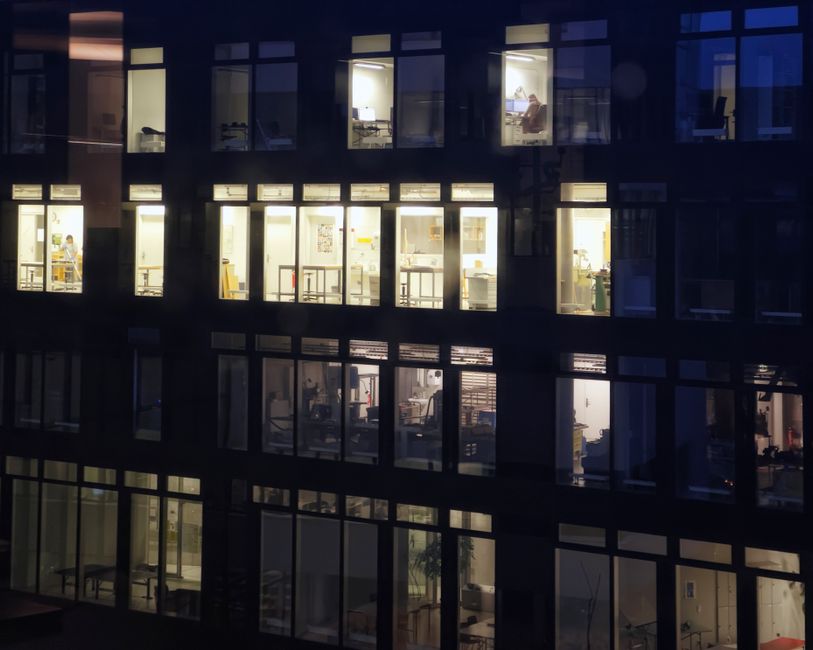
At least 340 new commercial licenses were issued in Tehran during the first five months of 1405 — the Iranian solar year running from March 2026 — according to figures from the Tehran Chamber of Commerce, Industries, Mines and Agriculture. The surge is concentrated in three sectors: food and beverage, technology services, and specialty retail. Together they are generating roughly 4,200 new positions in the capital, and recruitment managers say they have never seen the competition for qualified staff this fierce.
The timing matters. Iran is burying its Supreme Leader this week, and the country's political establishment is consumed by questions of succession and legitimacy. Against that backdrop, the private sector is moving fast, treating the uncertainty as a window rather than a warning. Business owners in Tehran say that licensing approvals have actually accelerated since late spring, and that landlords in commercial districts are signing shorter leases — sometimes 18 months instead of the standard three years — to attract tenants willing to open quickly.
Valiasr, Jordan, and the New Geography of Hiring
The geography of new openings tells its own story. Valiasr Street, which runs nearly 18 kilometres from Tajrish Square in the north to Tehran Railway Station in the south, has seen at least two dozen new food-and-beverage establishments open between Parkway and Vanak Square since March. Meanwhile, the Jordan Boulevard corridor — long known for imported goods and upmarket services — now hosts three newly licensed co-working spaces, the most prominent of which, Nexus Hub Tehran, opened its 1,200-square-metre facility in June and reported a full waiting list within a fortnight.
The Iran Talent Acquisition Association, a private industry group based in the Argentineh Square district, tracked 11,400 active job postings in Tehran during June 2026 — up 28 percent from the same month in 1404. Entry-level positions in café management and front-of-house hospitality are advertising starting salaries of 18 to 22 million tomans per month, a 35 percent jump over what similar roles paid two years ago. Technology positions at registered startups in the Sharif Technology Park ecosystem — clustered around Azadi Square in western Tehran — are offering packages between 60 and 90 million tomans monthly for mid-level software engineers, a figure that is making the salary scales at many ministries look thin.
That gap is reshaping career calculations for graduates. Sharif University of Technology's placement office reported in May that 61 percent of its 2025 engineering graduates accepted private-sector offers within 90 days of graduation, compared with 44 percent in 2023. The drain is visible at state institutions: three mid-sized government agencies in the Shahrak-e Gharb administrative zone acknowledged in internal circulars — copies of which circulated widely on industry channels in June — that they were struggling to fill specialist IT roles because candidates were declining offers on salary grounds.
What Employers and Job Seekers Should Expect Next
The hiring competition is unlikely to ease before the end of summer. The Tehran Municipality's Urban Development and Renovation Organisation has already approved permits for a 14,000-square-metre mixed-use commercial complex near Niavaran, scheduled to begin tenant fit-outs in September. That project alone is projected to generate 500 permanent positions once fully operational. Smaller openings — the independent bookshop on Enqelab Avenue that hired eight people last month, the artisan bakery in Narmak that is recruiting a pastry team of five — add up faster than any single headline development.
For job seekers, the practical advice from Tehran-based human resources firms is straightforward: certifications in food safety management, proficiency in English-language point-of-sale software, and any demonstrable experience with social media marketing are the three skills that employers mention most often as differentiators. For businesses, the recruitment pressure is a cost they need to model honestly. Landlords on Valiasr are not reducing rents — prime ground-floor space between Vanak and Mirdamad still runs above 400 million tomans per month — and wages are rising. The margin arithmetic is tightening even as the storefronts multiply.