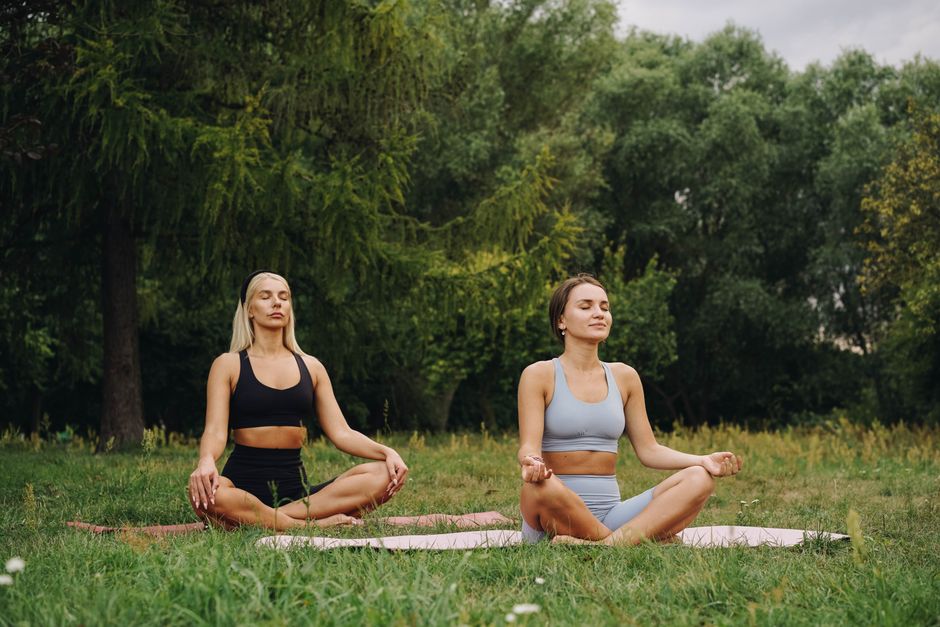
Tehran now has more than 400 registered yoga and wellness studios operating under licences issued by the Iran Yoga Federation, a figure that has more than doubled since 2019. The capital's practitioners range from retired civil servants in Shemiran seeking gentler movement to young professionals in Jordan neighbourhood squeezing a 6 a.m. Vinyasa class between work shifts. The question most newcomers face is not whether to try yoga — it is which of its many forms will actually stick.
Hormones, stress physiology and sleep quality are all receiving renewed attention in global wellness coverage this year, and Iranian practitioners and instructors are fielding the same questions their counterparts in Istanbul and Kuala Lumpur are hearing: what does the body actually need, and how hard should the practice push it? The answers differ sharply depending on style.
The main styles and what they demand from you
Hatha yoga is the most commonly offered class in Tehran studios and the logical entry point for beginners. Sessions typically run 75 minutes, hold individual postures for 30 to 60 seconds each, and pair breathing exercises — pranayama — with the physical sequence. The Saba Yoga Centre on Vali-e-Asr Avenue near Mellat Park runs morning Hatha sessions for 850,000 rials per class, making it one of the more affordable options in the northern half of the city. The pace is forgiving enough for people returning from injury or those managing chronic lower-back problems, which the Iranian Orthopaedic Association estimated in 2024 affects roughly 28 percent of Tehran's adult working population.
Vinyasa, sometimes marketed here as Flow Yoga, is a different proposition entirely. Postures link together in continuous movement synchronised with the breath, creating a cardiovascular challenge that can burn between 400 and 600 calories per hour. The Nirvana Wellness Club in the Zafaraniyeh district offers Vinyasa five mornings a week, with monthly memberships priced around 12 million rials. This suits people whose fitness baseline is already moderate and who find static stretching too passive to hold their attention.
Yin Yoga sits at the opposite extreme. Postures are held for three to five minutes, targeting connective tissue rather than muscle, and the practice is almost entirely floor-based. For desk workers in central Tehran — particularly those logging long hours near the government ministries around Imam Khomeini Square — Yin addresses the hip flexor tightness and spinal compression that accumulates after eight-hour sitting days. Several community centres in the Narmak district in east Tehran have incorporated Yin sessions into evening programming specifically for that demographic, charging between 500,000 and 700,000 rials per drop-in class.
Ashtanga is the most structured and demanding of the mainstream styles. It follows a fixed sequence of postures — the Primary Series — practised six mornings a week in its traditional form. The discipline appeals to people who respond well to measurable progression; the sequence does not change, so improvements are unambiguous week to week. It is not suitable for complete beginners, and instructors at the Tehran Yoga School in the Saadat Abad neighbourhood routinely ask new students to complete at least eight Hatha sessions before attempting an Ashtanga class.
Matching the practice to your actual week
The practical decision is ultimately a scheduling one. A person with three unpredictable late evenings per week will not maintain an Ashtanga commitment. Someone managing anxiety alongside a demanding job may find that Vinyasa amplifies cortisol rather than reducing it, and that Yin or Hatha serves them better. The Iran Yoga Federation recommends that first-time practitioners attend at least two trial sessions across different styles before committing to a monthly membership — advice that is easier to follow now that many Tehran studios offer a single-week introductory pass for between 1.5 million and 2 million rials.
The federation also maintains a publicly searchable instructor registry on its website, which lists qualification levels and studio affiliations across all 22 Tehran districts. Cross-referencing that registry with a studio's class schedule before signing up is the simplest safeguard against paying for a class pitched at a level that does not match your current fitness. As always, anyone managing a specific medical condition should speak with a physician before starting any new physical practice.