Property
How Much Rent Is Too Much? The 30% Rule in Practice
A decades-old financial benchmark says Tehranis should spend no more than 30% of their income on rent — but for millions in the capital, that number was crossed long ago.
4 min read
Property
A decades-old financial benchmark says Tehranis should spend no more than 30% of their income on rent — but for millions in the capital, that number was crossed long ago.
4 min read
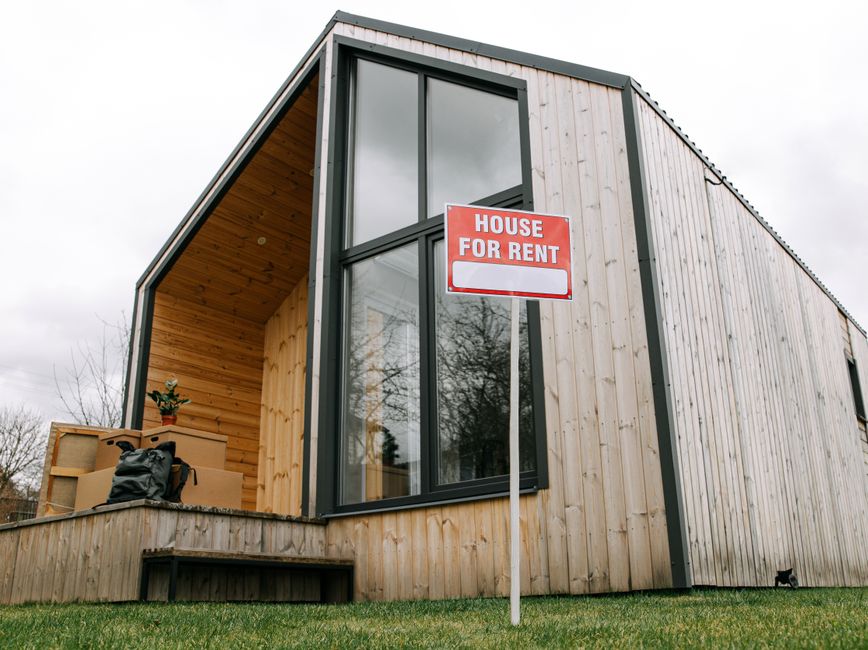
Renters in Tehran are now spending, on average, between 55% and 65% of their monthly household income on rent, according to data compiled by the Iran Real Estate Consultants Union in June 2026. That is more than double the threshold that housing economists have long treated as the outer edge of affordability — the rule that says no household should commit more than 30% of gross income to housing costs.
The timing matters. The city is absorbing the uncertainty of a political transition following the death of Ayatollah Khamenei, whose funeral drew enormous crowds in Tehran this week. Political transitions in Iran have historically frozen or distorted property markets for months at a time, and analysts watching the rental sector say landlords are already hedging — holding units off the market or demanding longer lease terms as a hedge against currency volatility. For renters already stretched past any reasonable limit, that squeeze is arriving at the worst possible moment.
The rule itself is straightforward. A household earning 50 million tomans a month — roughly the declared median income for a dual-earner family in Tehran according to the Statistical Centre of Iran's spring 2026 survey — should pay no more than 15 million tomans in monthly rent to stay within the threshold. In Ekbatan, the large residential complex in western Tehran that has historically been considered middle-class affordable, a standard 80-square-metre apartment now lists at between 22 million and 28 million tomans per month. In Narmak, in the east of the city, prices have climbed to 18 million tomans for comparable square footage. Neither neighbourhood is anywhere near the leafy streets of Zafaraniyeh or Elahiyeh in the north, where monthly rents on mid-tier units routinely exceed 60 million tomans.
The Iran Real Estate Consultants Union, which maintains offices on Vali-e-Asr Avenue and tracks transaction data across all 22 Tehran municipal districts, reported that the average rent per square metre in the city hit 280,000 tomans in May 2026 — a 34% year-on-year increase. That is not a one-month spike. Rents have risen faster than wages every single year since 2019. The purchasing power gap has simply widened too fast for the 30% rule to function as anything other than an aspirational target for the majority of the capital's estimated 5.5 million renter households.
The logical counterargument is that renters who find monthly costs unsustainable should consider buying. The numbers do not support that escape route. A 70-square-metre apartment in Shahrak-e-Gharb, a mid-northern district popular with young professionals, is currently priced at approximately 12 billion tomans. A conventional mortgage through Bank Maskan, the state-owned housing bank, covers a maximum of 1.5 billion tomans over 20 years. The gap between what the bank will lend and what the market demands is not a gap — it is a chasm. First-time buyers without substantial family capital are effectively locked out.
The government's Nehzat-e-Melli Maskan programme, the national affordable housing scheme that broke ground on hundreds of thousands of units across Iran from 2021 onward, was supposed to ease this pressure. Deliveries in Tehran have been slower than promised. The Tehran Municipality confirmed in April 2026 that fewer than 12,000 units within city boundaries had been handed over to applicants since the programme launched, against an original target of 100,000 for the capital.
For renters navigating this market right now, housing advisers at the Tehran Consumer Protection Association recommend several practical steps: negotiate lease renewals at least three months before expiry, request written rent-increase caps tied to official Central Bank of Iran inflation figures, and document all verbal promises from landlords before signing. Households earning below 30 million tomans a month may qualify for a rental subsidy through Tehran Municipality's Komak-e-Ejare scheme — a programme that has been underfunded but not cancelled, and applications for the second half of 1405 open on 15 July. The 30% rule may be out of reach for most Tehranis. Knowing exactly how far out of reach, and why, is the first step to demanding something better.
Property
Property
Property
Property
About this article
Published by The Daily Tehran
Spread the word
Daily brief
Free, in your inbox before 7am. Weekdays.
The Daily Network — local news across Australia