Property
Is Renting Actually Cheaper Than Buying Right Now?
With mortgage costs running nearly double monthly rent in some Tehran districts, a growing number of households are doing the sums and staying put as tenants.
4 min read
Updated 1 h ago
Property
With mortgage costs running nearly double monthly rent in some Tehran districts, a growing number of households are doing the sums and staying put as tenants.
4 min read
Updated 1 h ago
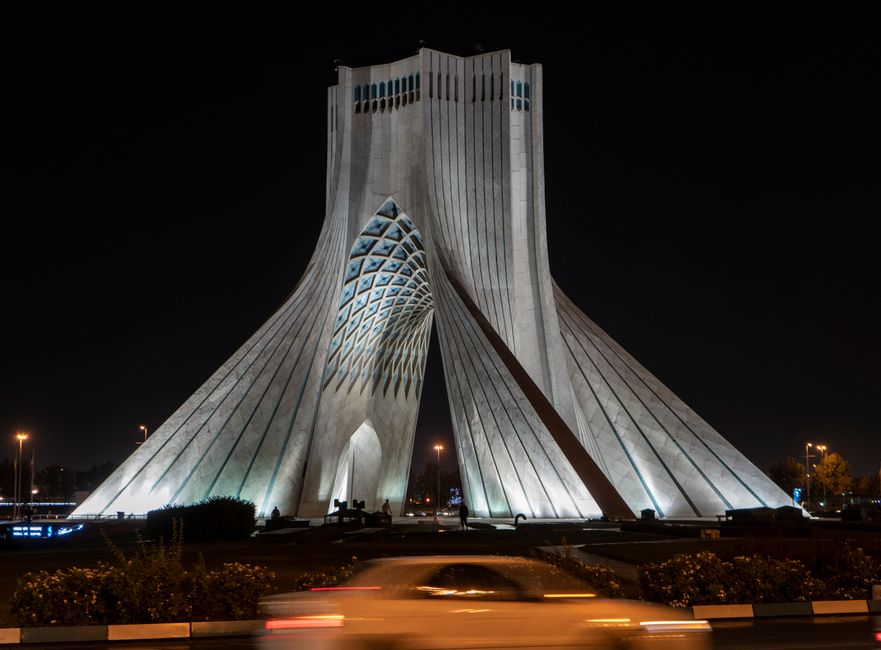
The answer, for most Tehran families right now, is yes — renting is cheaper than buying, often by a wide margin. New figures compiled by the Iran Real Estate Consultants Union show that the monthly carrying cost of a purchased apartment in central Tehran currently runs between 40 and 60 percent higher than the equivalent rent, once mortgage interest, notary fees and annual property levies are factored in. That gap has widened sharply since the Central Bank of Iran raised its benchmark lending rate to 23 percent in March 2026.
The timing matters. Ayatollah Khamenei's death this week has thrown the political succession into the open, and markets are pricing in uncertainty. The Iranian rial slid roughly 4 percent against the dollar in the three trading days through Thursday. Construction materials priced in dollars or euros have become more expensive overnight, pushing up replacement costs and, by extension, asking prices for new units. Yet rents have not moved in lockstep. Landlords in many districts are holding renewal increases to between 15 and 25 percent — the ceiling informally encouraged under the Housing Ministry's Rental Support Framework — while sellers are still pricing properties as if the currency had not moved at all.
Consider Elahiyeh, the upmarket district in northern Tehran where a 120-square-metre apartment lists at around 95 billion rials — roughly $190,000 at the free-market rate as of July 3. A buyer putting down 30 percent and taking a 20-year bank loan at 23 percent faces monthly repayments of approximately 1.4 billion rials. The same flat rents for 650 to 700 million rials a month. The ownership premium is thus more than double the monthly rent. Move south to Narmak, a solidly middle-class neighbourhood near Resalat Metro Station, and the arithmetic is similar: purchase costs imply monthly obligations of around 800 million rials versus rental asking prices of 380 to 420 million rials for comparable stock.
Tehran's price-to-rent ratio — a standard measure dividing purchase price by annual rent — now sits above 18 in most districts tracked by the Urban Development and Renovation Organisation of Iran, known locally as UDRO. A ratio above 15 is conventionally taken as the point at which renting starts making financial sense for households without a strong reason to own. In Zafaraniyeh, the ratio exceeds 22. Even in relatively affordable Tehranpars in the east, it has climbed to around 17, up from 13 in early 2023.
The Bank Maskan mortgage product — the state-backed home loan still pitched as the primary route to ownership for first-time buyers — offers a maximum facility of 5 billion rials for a couple, a figure so far below actual property prices in any district inside the Ring Road as to be almost symbolic. Buyers typically must stitch together three or four separate loan products, each carrying its own fees and rate, to close a purchase. That complexity is pushing younger households, particularly those aged 28 to 40, to reassess ownership as a near-term goal.
The calculus is not uniform. Buyers who can put down 50 percent or more, particularly those with foreign-currency savings, face a different equation: the rial's weakness is effectively discounting hard assets priced in local currency. For that cohort, buying in districts like Jordan Boulevard or Pasdaran remains defensible as a store of value, even if monthly cash flow looks worse than renting.
For everyone else, property advisers at the Tehran Association of Real Estate Agencies are telling clients to run a simple break-even test: divide the purchase price by 200. If the result is higher than the monthly rent for a comparable property, renting wins on a five-year horizon. By that test, renting wins almost everywhere in Tehran today.
The practical advice is straightforward. Sign a two-year lease now, with a written rent-increase cap tied to the official inflation index. Park the down payment in a short-term deposit or a gold-linked savings account. Revisit the buying decision after the succession picture clarifies and borrowing costs potentially ease — a process that is unlikely to resolve before the first quarter of 2027 at the earliest.
Property
Property
Property
Property
About this article
Published by The Daily Tehran
Spread the word
Daily brief
Free, in your inbox before 7am. Weekdays.
The Daily Network — local news across Australia