Wellness
Journaling as a Mindfulness Tool: How to Start
Tehran's growing wellness community is turning to pen and paper as a daily mental health practice — and the science says it works.
4 min read
Updated 1 h ago
Wellness
Tehran's growing wellness community is turning to pen and paper as a daily mental health practice — and the science says it works.
4 min read
Updated 1 h ago

More Tehranis are picking up notebooks. Walk into Shahrvand bookstore on Vali-e-Asr Avenue on any weekday afternoon and the dedicated journal and planner section — expanded significantly since late 2024 — tells you something is shifting. Journaling, long treated as a teenage habit or a literary affectation, is now being prescribed by wellness coaches and therapists across the capital as a structured mindfulness tool.
The timing is not accidental. Urban stress indicators in Tehran have climbed sharply over the past two years. The Tehran Urban Research and Planning Center reported in its 2025 annual review that roughly 34 percent of residents aged 25 to 45 identified chronic anxiety as a daily concern — up from 27 percent in 2022. Soaring commute times, economic pressure, and the sheer density of a city of 10 million people have pushed many residents toward low-cost, accessible mental health practices. Journaling fits that description almost perfectly: a decent notebook at Kianoush Stationery in the Grand Bazaar runs between 80,000 and 200,000 tomans, and a pen is cheaper still.
The evidence for expressive writing as a mental health tool is substantial. A widely cited study published in the Journal of Experimental Psychology found that writing about worries for 10 minutes before a stressful task freed up working memory and improved performance. Separate research from the University of Rochester, published in 2023, linked consistent reflective journaling — defined as three or more sessions per week — to measurable reductions in cortisol levels over a six-week period. Neither study treated journaling as therapy. Both framed it as a complement to professional care, a distinction that matters.
At Aram Mindfulness Center in the Elahiyeh neighborhood, facilitators have incorporated structured journaling into their eight-week Mindfulness-Based Stress Reduction program since January 2025. Participants are given specific prompts at the end of each session — questions about physical sensations, emotional triggers, and moments of gratitude — rather than being told simply to "write whatever you feel." That structure is deliberate. Unguided free-writing can occasionally spiral into rumination, particularly for people managing depression. Prompt-based journaling keeps the practice forward-leaning.
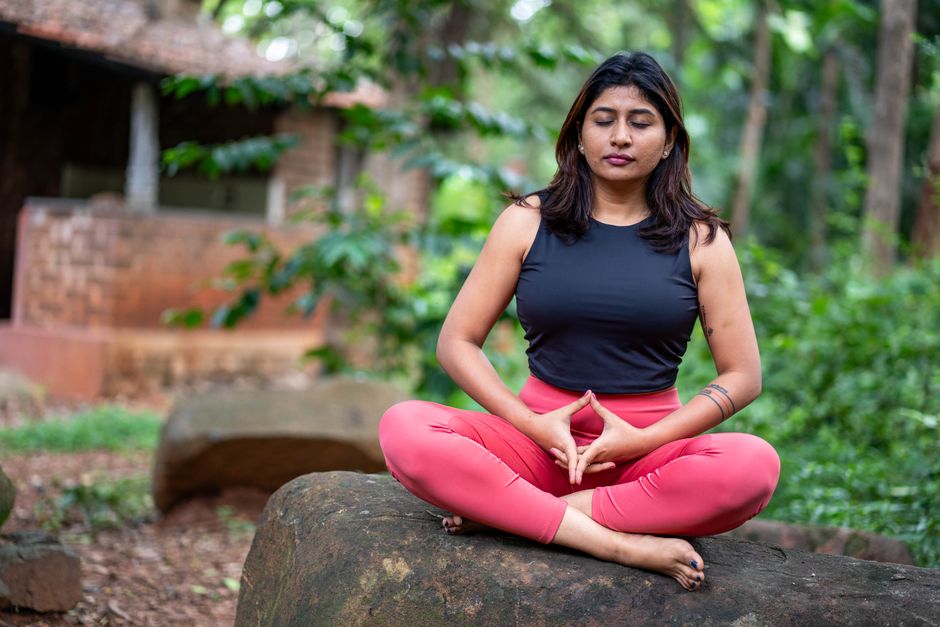
The Didehban Psychological Services clinic in Tajrish has reported a similar trend. Their therapists began recommending between-session journaling to clients in 2024, using a method drawn partly from Acceptance and Commitment Therapy. The idea is to use the journal not as a record of events but as a space to observe thought patterns without judgment — which is, functionally, the same cognitive exercise as seated meditation, just expressed through language rather than silence.
Starting is simpler than most people expect. Five to ten minutes is enough. Morning works well for many people — specifically the window just after the Fajr prayer or early breakfast, before the noise of the day sets in. Evening works better for others who need to decompress after a commute on Line 7 of the Tehran Metro.
The format does not need to be a diary entry. Three specific prompts that wellness practitioners in Tehran commonly recommend: What am I carrying into today? What felt true about yesterday? What do I want to let go of before I sleep? These are not therapeutic exercises requiring professional supervision. They are orientation tools — ways of pausing before the next rush begins.
Paper is better than a phone screen for this practice, and not just anecdotally. A 2021 study from the University of Tokyo found that writing by hand activated regions of the brain associated with memory encoding and emotional regulation more robustly than typing. Grab a notebook. Date each entry. Keep it somewhere visible, because visibility is accountability.
Tehran's wellness culture — centered in neighborhoods from Niavaran to Narmak — has spent years chasing imported trends: cold plunges, intermittent fasting, breathwork. Journaling is quieter and cheaper than all of them. It requires no equipment, no class schedule, and no instructor. Anyone considering adopting it as a regular practice should discuss their mental health needs with a qualified local professional first, particularly if managing clinical anxiety or depression. For everyone else, the barrier to entry is exactly the cost of a pen.
About this article
Published by The Daily Tehran
Spread the word
Daily brief
Free, in your inbox before 7am. Weekdays.
The Daily Network — local news across Australia